An Eye test is more than just checking your vision
Most people book an eye test when they notice something is wrong. A headache that won’t go away. Words that blur on the page. Struggling to read road signs at night. But by the time symptoms show up, something may have already been going on for a while.
A routine eye examination is not just about finding out if you need glasses. It’s a health check. And it’s one that most people put off for far too long.

How often should you go?
The general recommendation for adults is every two years. But that’s a baseline, not a rule for everyone.
Children should be tested more regularly, ideally every year. Their vision changes quickly, and uncorrected problems can affect learning and development in ways that aren’t always obvious.
If you’re over 60, annual check-ups are a good idea. The risk of conditions like glaucoma, cataracts and macular degeneration increases with age. Early detection makes a real difference.
An if you spend long hours in front of a screen, or if you have diabetes or a family history of eye disease, once a year is the right rhythm for you too.
What actually happens during an eye test?
People are often surprised by how through a full eye examination is.
At Rachel Murray Eyecare, appointments are 45 minutes. That’s enough time to do things properly. The examination covers both your vision and the health of your eyes, using up-tp-dare clinical equipment in a relaxed unhurried environment.
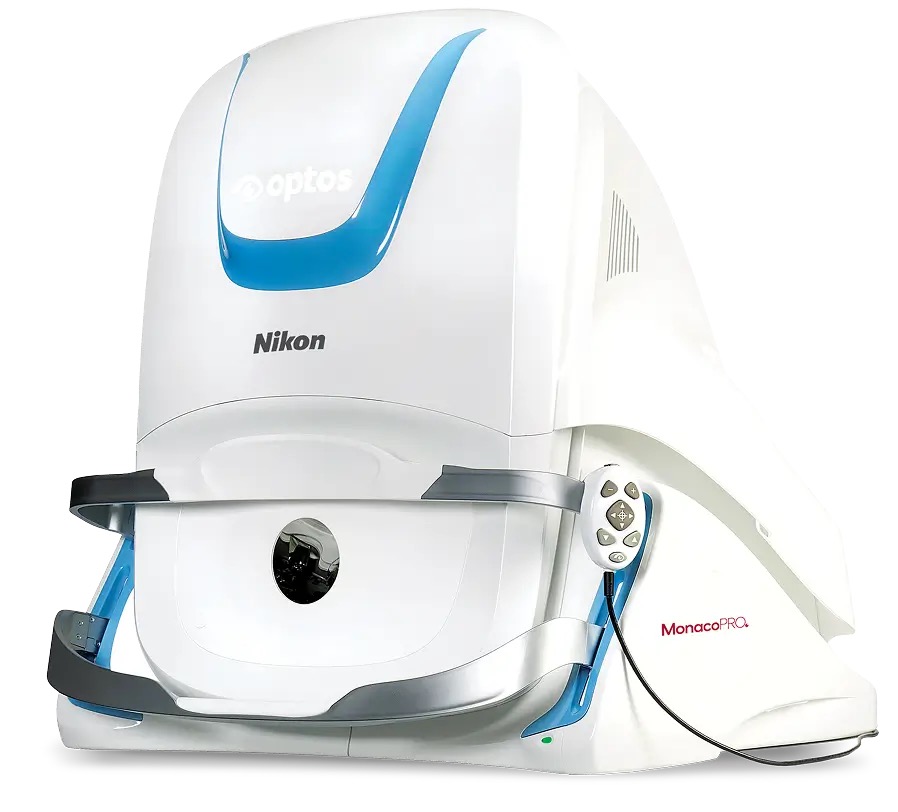
One of things that sets the practice apart is the Optos Monaco, a state-of-the-art retinal scanner. It captures a wide-field image of the back of your eye in seconds, without drops or discomfort. It gives a level of detail that a standard examination simply can’t match.
Rachel Murray Eyecare is also one of the only practices in Ireland to offer the full Zeiss experience, which means your vision assessment is done with some of the most precise technology available.

What are they looking for?
Beyond your prescription, the optometrist is screening for conditions that often develop silently. Glaucoma, for example, has no symptoms in it early stages. Neither does macular degeneration. Diabets can first show up in the blood vessels at the back of the eye, sometimes before a person even knows they have it.
Finding these things early changes the outcome. That’s why regular testing matters even when you feel your vision is perfectly fine.
If glasses are needed
If your prescription has changed or if this is your first time needing glasses, you won’t be left to figure it out on your own. The team at Rachel Murray Eyecare will guide you through the lens options that suit your vision and your lifestyle best. It’s part of the appointment, not an afterthought.